Furniture Design · Living Room
Sofa Cushion Formats: Bench Seats, Loose Cushions, and Tight Backs
A sofa’s cushions are more than a finishing detail. Their arrangement sets the pace of its silhouette, shapes how people settle in, and influences the small rituals of everyday care. From the uninterrupted sweep of a bench seat to the tailored poise of a tight back, each format offers a distinct balance of appearance, comfort, and upkeep.
When comparing sofas, it is easy to begin with color, fabric, or overall dimensions. Yet cushion layout often determines the character of a piece just as strongly. A continuous seat can feel calm and expansive; separate cushions give the composition a clear rhythm; a fixed back can create a crisp, composed outline. These details also affect how a sofa behaves in a busy room, how easily its cushions can be adjusted, and what maintenance may be needed over time.
Cisco Home sofas offer useful examples of these different approaches. The Richard Sofa pairs a bench seat with a tufted back, while the Vista Sofa uses separate seat and back cushions. The Brook Sofa takes a more tailored route with a tight seat and tight back. Looking at these designs side by side reveals why no single cushion configuration is universally best. The right choice depends on how the sofa will be used, what kind of support feels comfortable, and the visual mood a room needs.
This guide explains the distinctions among bench seats, loose cushions, and tight backs, then sets out practical questions to consider before choosing. The goal is not to prescribe a look, but to help you read the details with confidence.
Why cushion arrangement matters
Cushion layout is one of the most legible elements of sofa design. It divides or unifies the seat, draws attention to the backrest, and changes the way a frame appears in a room. A sofa with one long seat cushion can look streamlined and generous. A two- or three-cushion arrangement introduces repeated lines that suggest separate places to sit. A fixed back, meanwhile, can make the whole form feel precise and architectural.
There is a practical dimension, too. Loose cushions can usually be moved, turned, or repositioned, depending on the construction. Fixed cushions stay in place and may offer a neater profile, but they cannot be rearranged in the same way. The number of cushions can influence how seating is shared, though it does not dictate it: a single bench seat can accommodate several people, while separate cushions do not necessarily create hard boundaries between occupants.
Cushion format is only one part of comfort. Seat depth, seat height, cushion fill, suspension, back angle, and upholstery all matter. A layout that looks inviting may feel too deep for one person or supportive and relaxed for another. It is best understood as a design clue, not a complete measure of comfort.
The bench seat: one continuous line
A bench seat is a single cushion spanning much or all of the sofa’s seating area. It creates a long, uninterrupted plane, often giving a sofa a modern, composed appearance. The visual effect can be especially appealing when the frame has clean lines or a wide, low profile: fewer seams let the silhouette speak clearly.
In use, a bench seat can feel open and flexible. There is no central gap between individual seat cushions, so people can settle across the length of the sofa without being assigned a particular cushion. This can suit casual lounging, shared seating, or rooms where the sofa is used in several ways throughout the day. A continuous cushion may also look especially cohesive beneath a row of loose back cushions or against a tightly upholstered back.
The trade-off is that one cushion carries the visual and physical impression of the whole seat. Depending on its construction and how it is used, regular sitting in the same area may leave more noticeable impressions there. Rotating or flipping a cushion may help when its design permits, but not every bench cushion is reversible. Before assuming that it can be turned, check the upholstery, seams, and manufacturer’s care guidance.
The Cisco Home Richard Sofa illustrates a bench-seat approach, pairing its broad seat cushion with a tufted back and a metal base. The combination brings together a continuous seating surface and a more articulated back treatment. It is a useful reminder that a sofa’s cushion formats need not match: the seat and back can each contribute a different kind of visual rhythm.
A bench seat is worth considering if you like a clean, uninterrupted look or prefer the freedom to move across the sofa without a pronounced division between seat cushions. As with any format, review the actual specifications and consider whether the cushion is fixed or removable, whether it is reversible, and how the fabric should be maintained.
Separate seat cushions: rhythm and definition
Separate seat cushions divide the sofa into two or more distinct sections. A two-cushion sofa has a quieter, broader division; a three-cushion arrangement introduces a more regular cadence across the frame. Seams become part of the design, echoing the sofa’s width and giving the seat a more structured appearance.
For everyday use, separate cushions can make some care tasks more straightforward. If the construction allows it, cushions may be rotated or switched between positions to distribute wear. That possibility is not guaranteed: cushions may be shaped or tailored for specific locations, and upholstery details may make them one-sided. It is helpful to ask whether a cushion is reversible and interchangeable rather than relying on appearance alone.
Separate cushions may also influence how people perceive the seating. Each cushion suggests an individual place, which can give a sofa a more formal or orderly feeling. But this visual division is not a rule about how many people can sit there. Cushion width, arm shape, overall sofa width, and the habits of a household all play a part.
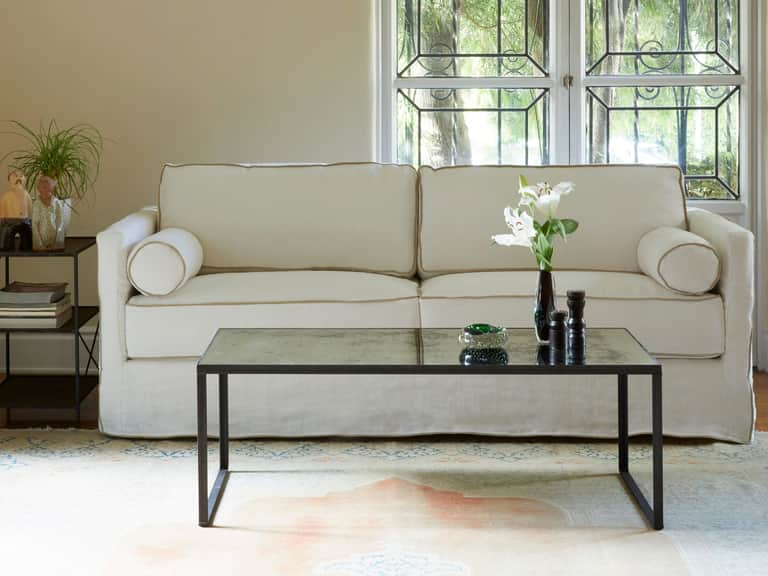
The Cisco Home Vista Sofa provides an example of a two-over-two arrangement, with two seat cushions and two back cushions. Its angular outline and flat welt detailing give the cushion divisions a defined place within the overall design. The listed specifications describe a 84-inch-wide sofa with a 60-inch-wide sitting space, while the loose cushions and bolster pillows add separate layers to its seating composition.
A multi-cushion sofa can feel particularly balanced in a room with other repeated elements, such as paired lamps, a long console, or a sequence of framed works. It can also bring a sense of order to a large seating area. If the aim is a more fluid, uninterrupted look, a bench seat may feel quieter. The distinction is subtle but significant: one emphasizes continuity; the other gives the eye a measured pattern.
Loose back cushions: adaptable softness
Loose back cushions sit against the sofa’s back and can often be lifted out or repositioned. They give upholstery a layered quality, softening the outline and adding depth. Depending on their fill and shape, they may feel yielding or more structured. Their position can also be adjusted to suit different ways of sitting, although the amount of adjustment depends on the cushion design and the sofa’s proportions.
Because loose backs are visible and handled frequently, they can develop a lived-in look. Regular plumping, reshaping, or repositioning may help maintain an even appearance, particularly where cushions use soft fills. This is not a flaw; it is part of the character of a softer sofa. Still, households seeking a consistently tailored profile may prefer a tighter back or a design with fewer loose components.
Loose back cushions can be paired with a bench seat, multiple seat cushions, or other seat formats. This pairing matters visually: a single seat cushion below several loose backs creates contrast between an uninterrupted base and a more varied upper line. With separate seat cushions and separate backs, the composition can feel more evenly segmented.
On the Vista Sofa, two back cushions complement the two seat cushions, with two bolster pillows adding a narrower, elongated accent. These elements shape the silhouette and give the seating area several layers. The listed construction also includes a no-sag support system, but cushion configuration and support construction are separate considerations: neither should be treated as a substitute for evaluating the other.
Tight backs: a tailored, fixed profile
A tight back is upholstered directly to the sofa rather than formed by removable back cushions. The result is a continuous, often neatly controlled surface. Depending on the upholstery and detailing, it can read as formal, modern, or quietly restrained. There are no loose back cushions to shift out of position, so the outline remains more consistent through ordinary use.
The same fixed construction changes the experience of adjustment. With no separate back cushions to move, the back support is determined by the shape and upholstery of the frame. That can be welcome for those who prefer a more contained appearance, but it may be less adaptable for someone who likes to adjust a cushion behind the shoulders or lower back. Try the sofa if possible, and consider how its back angle and seat depth work together.
The Cisco Home Brook Sofa is described with a tight seat and tight back, a combination that keeps both upholstered surfaces visually composed. Its 8-way hand-tied support and FSC-certified hardwood frame are construction details distinct from the cushion layout. This distinction is useful when comparing any sofa: the visible arrangement tells you about form and flexibility, while the underlying frame and suspension contribute to support and durability.
A tight back can be a natural choice for a room that calls for a clean outline or for people who would rather avoid the repeated task of arranging loose cushions. It may also be a strong visual counterpoint to more relaxed elements, such as a soft throw or an upholstered ottoman. As with all fixed upholstery, routine care should follow the fabric and maker’s instructions; an attached cushion is not automatically easier to clean.
Mixing formats: contrast without clutter
Many sofas combine different cushion arrangements rather than following a single formula. A bench seat beneath loose back cushions balances a strong horizontal line with a softer, more flexible upper section. Separate seat cushions paired with a tight back create a more regular base beneath a clean, uninterrupted backrest. A tufted back, meanwhile, adds pattern and texture without becoming a row of loose cushions.
When looking at a mixed format, consider where the eye is drawn first. A broad bench cushion makes the seat feel expansive; a buttoned or tufted back can become the central feature. Repeated cushion seams may add structure, while bolsters introduce a smaller accent. These details can influence whether a sofa feels formal, casual, or somewhere between the two.
Scale also matters. In a compact room, a clean cushion layout may help a sofa read simply, although the total width and arm profile are more decisive than cushion count alone. In a spacious room, multiple cushions can give a generous sofa a stronger sense of proportion. The aim is not to minimize every seam, but to choose a layout that feels coherent with the furniture and architecture around it.
Comfort is more than cushion count
It is tempting to interpret cushion layout as a direct comfort ranking: bench seats for lounging, separate cushions for upright sitting, tight backs for formality. In practice, these associations are only starting points. Cushion fill, firmness, seat depth, seat height, back angle, and support beneath the cushion all affect how a sofa feels.
A deep seat may allow someone to tuck their legs up or lounge, but it may feel less supportive to a person who prefers to sit with feet firmly on the floor. A shallower seat can suit a more upright posture, yet may not offer the same sense of sprawl. A soft cushion can feel inviting at first, but comfort over time depends on how well its support suits the user and how it holds up under regular use.
Pay attention to the sitting-space measurements as well as the overall dimensions. The total width includes elements such as arms, while sitting space describes the usable area between them. Seat height and depth can be just as consequential as cushion configuration, particularly when the sofa is used for long periods or shared among people with different preferences.
Whenever possible, sit in a sofa in the way you expect to use it: upright, leaning back, or reclining. Notice whether the seat supports your legs, whether the back meets your body comfortably, and whether loose cushions stay in a position that feels natural. Product descriptions help you narrow the options, but they cannot replace a careful assessment of fit.
Care, wear, and the rhythms of daily life
Every cushion format has its own care considerations, but no layout eliminates maintenance. Loose seat and back cushions may be easier to lift for routine cleaning around the sofa, and some can be rotated to help distribute wear. Fixed cushions may hold a more consistent profile but can make access beneath the upholstered surface less direct. Actual cleaning methods depend on the fabric, fill, and construction, so follow the manufacturer’s guidance.
For removable cushions, check whether the covers are removable and whether they can be cleaned at home. A zipper does not necessarily mean a cover is washable. Fabric care labels and upholstery instructions should guide any treatment. Avoid assuming that a cushion is reversible simply because it is loose; tufting, seams, or fabric placement may make it one-sided.
Daily habits matter, too. A household that regularly shares a sofa may appreciate the flexible feel of loose cushions, while a room kept especially formal may benefit from a more tailored arrangement. Pets, children, frequent entertaining, sunlight, and the location of the sofa can all affect fabric wear and maintenance needs. These considerations are independent of whether the seat is continuous or divided.
For long-term planning, assess the sofa as a whole. Frame materials, joinery, suspension, upholstery, and cushion construction work together. A well-chosen silhouette can remain appealing for years, but thoughtful use and appropriate care help preserve its comfort and appearance.
A practical comparison before you choose
Before settling on a sofa cushion style, compare more than the product photograph. Ask clear questions about what is fixed, what can be removed, and what can be repositioned. This makes the difference between visual preference and everyday practicality easier to understand.
- Seat layout: Is there one bench cushion or a set of separate seat cushions?
- Back construction: Are the back cushions loose, attached, tufted, or tightly upholstered?
- Reversibility: Can seat or back cushions be flipped or rotated, and are they interchangeable?
- Comfort dimensions: What are the seat height, seat depth, and usable sitting width?
- Support: What suspension and cushion construction are specified, and do they suit your preferences?
- Care: Are covers removable, and what cleaning methods are recommended?
- Room fit: Will the sofa’s full width, depth, and back height work with circulation and nearby furniture?
These questions encourage a more considered comparison than cushion count alone. Two sofas with the same number of seats may feel very different because of their depth, fill, back angle, and frame. Likewise, two sofas with different formats may both work beautifully in the same room if their proportions and construction meet the household’s needs.
Choosing a format that feels right at home
A bench seat offers continuity and an expansive visual line. Separate seat cushions bring order and visible rhythm, with potential flexibility when their construction permits rotation. Loose back cushions add softness and adjustability; tight backs maintain a more fixed, tailored shape. These are not strict lifestyle categories, but useful ways to understand how a sofa is designed to look and behave.
Consider the room’s atmosphere as well as its practical demands. A living room designed for relaxed evenings may welcome a soft, layered arrangement. A more formal space might benefit from the clarity of a tight back. A sofa used by several people throughout the day may call for an arrangement that accommodates varied positions and preferences. The best choice is the one that feels inviting in context and makes sense for its intended use.
In the end, cushion layout is a small design decision with a large presence. It shapes the silhouette, influences everyday upkeep, and helps define the way a room feels. Study the seams, ask about the construction, compare dimensions, and trust comfort as much as appearance. When these details work together, a sofa becomes more than a pleasing outline: it becomes a considered part of the life lived around it.